Claiming the Record: How Kurdish-American Archivists Are Rewriting the Margins of American History
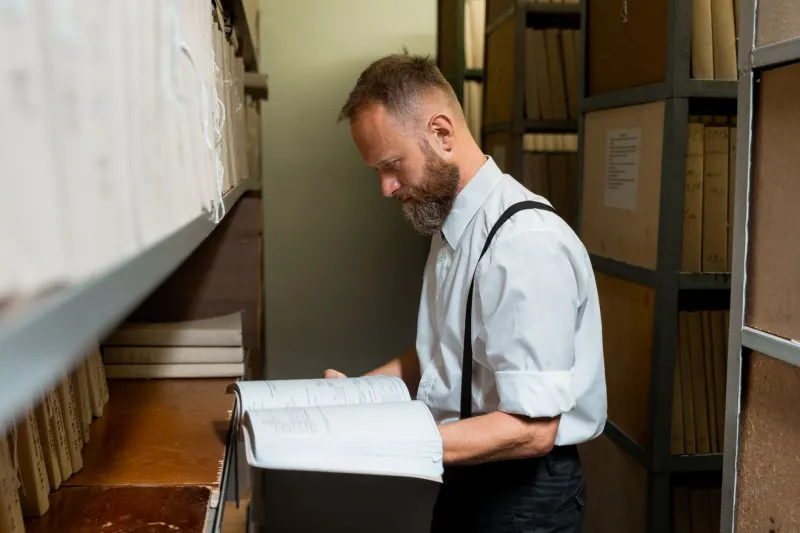
In a climate-controlled storage room in Nashville, Tennessee, Shireen Mahmoud keeps what she calls her "second library." Stacked in acid-free folders and labeled with meticulous care are photographs, handwritten letters, newspaper clippings from Kurdish-language publications, and audio cassettes recorded in the early 1990s by newly arrived Kurdish refugees navigating an unfamiliar country. None of it would survive in any federally funded archive. Almost none of it has ever been formally catalogued. And yet, Mahmoud insists, every single item is American history.
"People assume American history belongs to institutions," she says. "But institutions only preserve what they decide matters. We are deciding that our story matters."
Mahmoud is part of a growing network of Kurdish-American individuals and organizations who have taken on the immense — and largely self-funded — work of documenting the Kurdish experience in the United States. Their archives are unconventional by academic standards: stored in spare bedrooms, church basements, and community center back offices. But the scope of what they are preserving is anything but small.
What the Official Record Leaves Out
The absence of Kurdish-American materials in mainstream American archives is not accidental. It is the byproduct of structural choices about whose migrations, whose cultural practices, and whose political struggles are deemed worthy of institutional memory. Kurdish communities began arriving in the United States in significant numbers during the 1970s and accelerated dramatically through the 1990s, following the Gulf War and the brutal suppression of the Kurdish uprising in northern Iraq. Hundreds of thousands of Kurds built lives in cities like Nashville, San Diego, Lincoln, and Detroit — yet their presence remains largely invisible in the holdings of state historical societies and university special collections.
Dr. Aryan Suleimani, a historian at a midwestern university who consults with several Kurdish-American community groups, describes the gap as both a practical and a political problem. "When an archive doesn't hold your community's records, it isn't just an inconvenience," he explains. "It sends a message that your history is supplementary — that it exists only in relation to someone else's narrative. Kurdish-Americans have been categorized under broader 'Middle Eastern' or 'Iraqi' umbrellas that erase the specificity of their experience."
That specificity matters enormously. The Kurdish-American story is not a single story. It encompasses the experiences of communities from Turkey, Iraq, Iran, and Syria, each carrying distinct dialects, political histories, and cultural traditions. To collapse these into a monolithic category is not merely imprecise — it is a form of historical distortion.
The Archivists Themselves
The individuals doing this preservation work come from remarkably varied backgrounds. In San Diego, a retired civil engineer named Kawa Rashid has spent the last twelve years digitizing more than four thousand photographs documenting Kurdish community life in Southern California — weddings, Nowruz celebrations, political demonstrations, and the mundane but irreplaceable images of families building ordinary American lives. He works with a flatbed scanner and free software, uploading files to a shared digital drive that community members across the country can access.
"I'm not a historian," Rashid says with a laugh. "I'm just someone who noticed that nobody else was doing this."
In Lincoln, Nebraska — home to one of the largest Kurdish communities in the United States — a collective of younger Kurdish-Americans has launched a more formally structured effort. The Kurdish Heritage Documentation Project, founded in 2019, combines oral history interviews with the collection of physical and digital artifacts. Their methodology draws on frameworks developed by Indigenous American archival movements, which have long grappled with the challenge of preserving community memory outside of, or in dialogue with, dominant institutional structures.
Project coordinator Narin Aziz describes their approach as deliberately political. "We are not just saving things," she says. "We are making an argument. We are arguing that these lives, these voices, these documents belong in the historical record of this country. Full stop."
Digital Tools, Analog Stakes
Technology has been both an enabler and a complication for these grassroots archivists. Cloud storage and digitization software have made it possible to preserve and share materials at a scale unimaginable to earlier generations. Social media platforms have allowed community members to contribute photographs and documents in real time, effectively crowdsourcing the archive.
But digital preservation carries its own vulnerabilities. File formats become obsolete. Platforms shut down or change their terms of service. Hard drives fail. Several archivists interviewed for this piece described losing years of work to technical failures — a reminder that the infrastructure supporting grassroots preservation is far more fragile than the reinforced stacks of a university library.
There is also the question of access and control. Who owns a community archive? Who decides what gets included, what gets redacted, and who can view sensitive materials — particularly documents related to political persecution or refugee status? These are not abstract questions. For Kurdish communities with members who still have family in countries where political affiliation can be dangerous, the ethics of archiving carry real stakes.
"We think carefully about what we make public and what we keep within the community," says Aziz. "Privacy matters. Trust matters. An archive that betrays its community isn't an archive — it's a liability."
Forcing an Institutional Reckoning
The most significant long-term impact of these grassroots efforts may be the pressure they are beginning to exert on mainstream American cultural institutions. Several Kurdish-American archivists have initiated formal conversations with state historical societies and university libraries, presenting their collections as potential acquisitions or partnership opportunities. The response has been uneven.
Some institutions have been genuinely receptive. A handful of university libraries in cities with large Kurdish populations have begun exploratory discussions about establishing dedicated Kurdish-American collections. Others have responded with polite indifference or with the suggestion that Kurdish materials might be incorporated into existing "Middle Eastern" collections — a solution that many archivists reject as precisely the kind of erasure they are working against.
"We are not a subcategory," says Mahmoud flatly. "We are not an addendum to someone else's collection. If institutions want to partner with us, they need to understand that from the beginning."
Dr. Suleimani sees the grassroots archives as holding a kind of leverage that community members may not fully recognize. "These collections are irreplaceable," he says. "Institutions know that. The materials that Kurdish-American archivists have gathered simply do not exist anywhere else. That gives the community real negotiating power — if they choose to use it."
A History Still Being Made
What emerges from conversations with Kurdish-American archivists across the country is a portrait of a community that has internalized a hard-won lesson: if you wait for official recognition to begin preserving your history, you will wait too long. The elders who arrived in the 1970s and 1980s are aging. The cassette tapes are deteriorating. The photographs are fading.
But there is also something more than urgency at work in these archives. There is a quiet insistence on dignity — a refusal to accept that the Kurdish-American experience is a footnote in the larger American story. Kawa Rashid puts it simply as he gestures toward a hard drive containing thousands of images of his community's life in Southern California.
"This is America," he says. "All of this — every face in every photograph — this is America. Someday, everyone will know that."
The work of making that day arrive is already well underway.