No Title Required: The Informal Power Brokers Quietly Reshaping Kurdish-American Civic Life
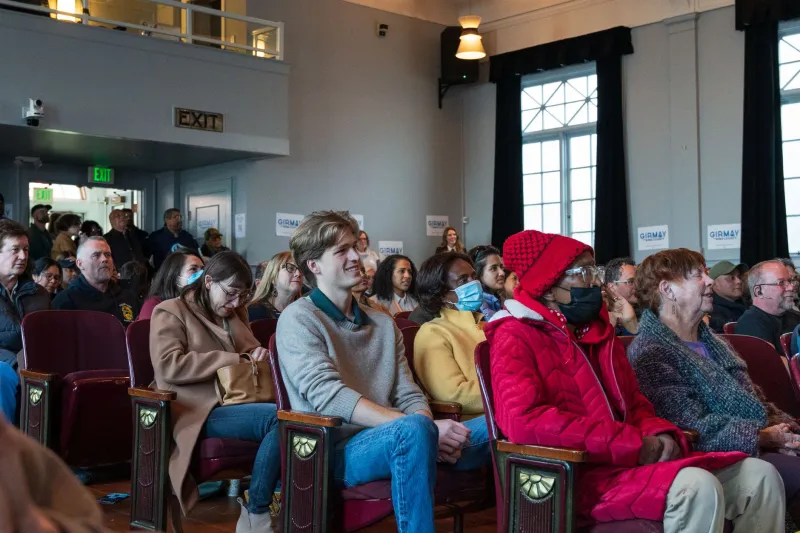
In a rented banquet hall in Nashville, Tennessee, on a Tuesday evening in late autumn, roughly forty people gathered around folding tables covered with printed agendas, styrofoam cups of chai, and plates of semolina cookies someone's mother had sent along. There was no official convener. No microphone. No elected chairperson calling the room to order. And yet, within twenty minutes, the group had mapped out a coordinated response to a proposed zoning change that threatened to displace three Kurdish-owned businesses from a corridor that the community had quietly come to regard as its own.
Nobody in that room held a political title. Most would not describe themselves as activists. Several had never attended a city council meeting in their lives. But what they had — and what an increasing number of Kurdish-American community spaces across the United States are cultivating — was something arguably more durable than any elected position: a practiced, deeply relational model of collective decision-making that has roots in the mountains and villages of Kurdistan and has found fertile new ground in American cities.
Power Without Portfolio
The question of who leads Kurdish-American communities is, in many ways, the wrong question. Leadership, as it functions within many of these networks, is not appointed or campaigned for. It accrues organically — through consistency, through the willingness to show up, through the particular social credibility that comes from being trusted across generational lines.
Sardar Mahmoud, a thirty-eight-year-old civil engineer who arrived in the United States from Sulaymaniyah in 2009, has never run for office. He does not sit on any nonprofit board. But ask anyone in his corner of Columbus, Ohio, who to call when a Kurdish family needs help navigating a hospital system, a lease dispute, or a school enrollment process, and his name surfaces immediately. "I don't think of it as leadership," he said in a recent conversation. "I think of it as just knowing people and knowing how things work. You connect the two, and something happens."
This model — what some scholars of diaspora civic life have begun calling "relational infrastructure" — is not unique to Kurdish Americans. But within this community, it carries a particular historical resonance. For generations, Kurdish political and social organization has had to operate outside of and often against formal state structures. The instinct to build laterally, through networks of mutual obligation rather than vertical hierarchies, is not a workaround. It is, for many, simply how community has always functioned.
The Architecture of Informal Organizing
What makes these networks effective is not their size but their density. In cities like Houston, San Diego, and Detroit — each home to substantial Kurdish-American populations — informal organizing tends to radiate outward from a small number of high-trust nodes: a halal grocery owner who has become a de facto information clearinghouse, a mosque that doubles as a social services referral hub, a WhatsApp group that started as a carpooling arrangement and evolved into a rapid-response civic network.
Dilnoza Aziz, a community health worker in Nashville who has spent the better part of a decade studying how Kurdish-American families access public services, describes the architecture as "a web that looks invisible until you need it." She notes that the same informal channels that circulate news about a new job opening or a family in crisis can, when the situation demands it, mobilize dozens of people toward a shared civic goal within hours.
"What surprises people from outside the community is how quickly consensus forms," Aziz observed. "But it's not quick because people agree on everything. It's quick because there's already a foundation of trust. The social work has already been done, over years, over meals, over countless small favors. When something important comes up, you're not starting from zero."
Translating Grassroots Energy Into Institutional Leverage
The challenge facing many of these networks now is a familiar one in the history of American civic organizing: how to translate grassroots energy into durable institutional leverage without losing the relational qualities that make the networks function in the first place.
Some communities are experimenting with hybrid models — creating loosely structured coalitions that can interface with city governments and grant-making bodies while preserving internal decision-making cultures that remain decentralized and community-controlled. In Minneapolis, a group of Kurdish-American women in their thirties and forties has spent two years building what they describe as a "civic fluency" program: informal workshops that walk community members through the mechanics of local government — how to read a city budget, how to register to vote, how to submit public comment — while grounding every session in the community's own values and priorities.
"We're not trying to turn people into lobbyists," said one of the program's founders, who asked to be identified only by her first name, Shirin. "We're trying to make sure that when the city makes a decision that affects our neighborhood, our people are in the room and they understand what's being decided. That's not politics. That's just self-determination."
What the Next Generation Is Inheriting
Perhaps the most consequential dimension of this organizing moment is what it means for the generation now coming of age — young Kurdish-Americans who grew up watching their parents navigate American institutions with varying degrees of success, and who are now beginning to step into civic roles of their own.
Many describe inheriting not a specific ideology but a set of instincts: a suspicion of top-down authority, a preference for collective deliberation, an understanding that community loyalty is both a resource and a responsibility. These are not abstract values. They are practiced behaviors, learned at kitchen tables and in mosque parking lots and on long drives to weekend cultural school.
What this generation is adding to the inheritance is fluency — in American political systems, in digital organizing tools, in the language of institutional advocacy. The combination, when it works, is formidable.
Back in that Nashville banquet hall, the meeting eventually wound down. No votes were taken. No formal resolution was passed. But by the time people began gathering their coats, a plan had taken shape: three community members would attend the next city planning session, two others would draft a letter to the council member's office, and someone's cousin — a paralegal — had agreed to review the zoning language pro bono.
It was, by any conventional measure, an unremarkable evening. It was also, in the fullest sense of the phrase, democracy at work.