Walls That Remember: How Kurdish-American Families Are Building Cultural Sanctuaries Inside Their American Homes
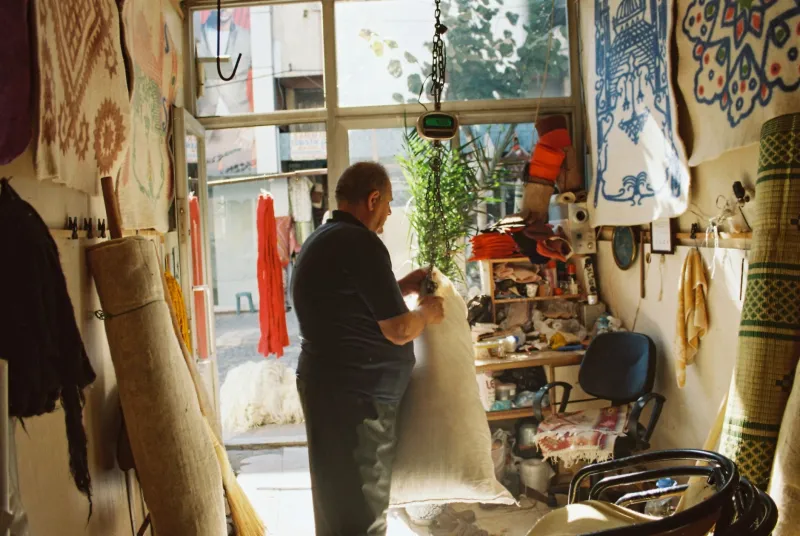
When Dilnoza Osman moved her family from Nashville to a larger home in the suburbs of Columbus, Ohio, the first thing she unpacked was not cookware or bedding. It was a folded kilim — a flat-woven textile her mother had carried out of southeastern Turkey nearly three decades ago. Before a single piece of furniture was placed, the rug was laid across the living room floor. "That rug tells us where we are," Osman says. "Not Columbus. Home."
For Kurdish-American families scattered across cities from Houston to Minneapolis, the act of designing a living space has taken on dimensions that go well beyond aesthetics. It is, for many, a deliberate and emotionally weighted practice — one that seeks to hold two geographies, two timelines, and two versions of selfhood within the same four walls.
The Psychology of the Curated Threshold
Psychologists who study immigrant identity have long noted the significance of the domestic environment as a site of cultural negotiation. Dr. Layla Karimi, a clinical psychologist based in Dearborn, Michigan, who works primarily with Middle Eastern and Kurdish-American communities, describes the home as "the first and most intimate act of self-definition available to a displaced person."
"When you cannot always speak your language in public, when your holidays are invisible on the national calendar, when your children come home speaking only English — the home becomes the last sovereign territory," she explains. "How you arrange that space is not decorative. It is political. It is psychological. It is survival."
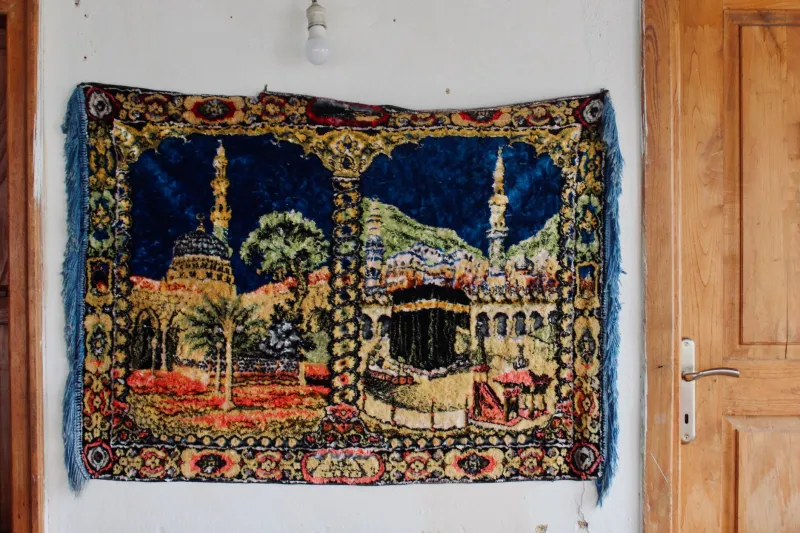
This dynamic manifests in ways both grand and granular. Some families commission custom cabinetry to display heirloom ceramics alongside American family portraits. Others orient their sitting rooms in configurations that mirror the communal gathering spaces of villages in the Zagros Mountains — low seating arranged in wide circles, prioritizing conversation over individual comfort. Still others designate entire rooms, or even alcoves, as what some families call a "memory corner": a curated arrangement of photographs, embroidered textiles, dried herbs, and small objects that function collectively as a domestic altar to ancestral life.
Designing With Intention: Voices From the Field
Samir Rashid, an interior designer based in Chicago who works extensively with Kurdish and broader Middle Eastern diaspora clients, has watched this phenomenon grow steadily over the past decade. "Ten years ago, clients would often apologize for wanting to incorporate Kurdish elements," he recalls. "They worried it would look 'too ethnic' or clash with contemporary American design trends. Now, those same clients are leading the conversation. They arrive with photographs of their grandparents' homes. They arrive with swatches of fabric their mothers wove."
Rashid describes a recent project in Naperville, Illinois, where a Kurdish-Iraqi family asked him to design a sitting room that could function simultaneously as a space for their American-born teenagers' social lives and as a formal reception room modeled loosely on the diwan — the traditional Kurdish communal gathering hall. The solution involved low, wide upholstered benches along three walls, geometric textiles in deep burgundy and gold, and a central coffee table inlaid with a pattern drawn from traditional Kurdish jewelry motifs. "The teenagers love it," Rashid says. "Their friends think it's sophisticated and different. And the grandparents feel recognized in it. That's the goal — not to freeze culture in amber, but to let it breathe inside a new context."
Architect Narin Baban, who practices in the Boston area and is herself of Kurdish-Iranian heritage, takes a more structural approach to the same challenge. In several residential renovation projects, she has introduced what she calls "threshold moments" — intentional transitions between rooms that draw on the architectural logic of traditional Kurdish domestic spaces, where movement between areas of a home was marked by subtle changes in ceiling height, material, or light. "In Kurdish village architecture, you always knew when you were moving from a public space to a private one, from a room for guests to a room for family," she explains. "I try to recreate that sense of layered intimacy, even in a suburban ranch house in Framingham."
The Photograph as Genealogy
Perhaps no element of Kurdish-American home design carries more cultural weight than the photograph display. In countless homes across the country, family photographs are arranged not casually but with the rigor of a curated exhibition. Elders appear prominently, often in settings that place them visibly within a geographic landscape — mountains, valleys, village squares — that American-born children may never have seen in person.
For Shirin Aziz, a mother of three in San Diego, the wall of photographs in her hallway is a teaching tool as much as a decorative choice. "My youngest was born here. She has never been to Kurdistan. But she can walk down our hallway and point to her great-grandmother's village, to the river her grandfather used to fish in, to the wedding dress her aunt wore," Aziz says. "She knows those people. She knows that landscape. It is inside our house, so it is inside her."
This practice of what some scholars call "visual genealogy" — the deliberate arrangement of images to communicate lineage, place, and continuity — is increasingly being recognized as a sophisticated form of cultural pedagogy. Dr. Karimi notes that children raised in homes where ancestral photographs are prominently displayed and regularly discussed demonstrate stronger ethnic identity formation and greater resilience in navigating bicultural identities. "The home teaches what the school cannot," she says simply.
Color, Fragrance, and the Sensory Grammar of Heritage
The cultural coding of Kurdish-American home spaces extends beyond the visual. Many families speak of fragrance as a powerful and intentional element — the smell of dried rose petals, cardamom, or specific herbs associated with regional cooking serving as olfactory anchors to memory and place. Color palettes drawn from the natural landscapes of Kurdistan — the deep greens of mountain forests, the warm ochres of sun-baked plains, the vivid reds and blues of traditional textiles — appear repeatedly in the design choices these families make.
Samir Rashid has noticed that his Kurdish-American clients gravitate toward what he describes as "a certain warmth and density" in their color choices, even when they are unaware of doing so deliberately. "There is something in the cultural memory that resists the cold minimalism that dominates so much American interior design right now," he observes. "These are spaces meant to feel inhabited, layered, alive — not staged."
A Living Architecture
What emerges from these conversations is not a single aesthetic or a fixed design vocabulary, but something more fluid and more meaningful: a collective, evolving practice of making space for memory inside the structures of American daily life. Kurdish-American families are not simply decorating their homes. They are constructing environments in which identity can be transmitted, questioned, celebrated, and ultimately handed forward.
Dilnoza Osman, whose kilim now anchors a living room that also holds a sectional sofa, a gaming console, and a gallery wall mixing family portraits with prints by a Kurdish-American artist she found on social media, puts it plainly. "My kids are American. They are also Kurdish. The house doesn't have to choose between those things. Neither do they."
In the architecture of the everyday — in the placement of a rug, the arrangement of a photograph, the warmth of a color on a wall — a homeland that cannot always be visited is nonetheless kept present, kept whole, kept alive.