Voices That Cross Borders: The Quiet Revival of Kurdish Languages in American Schools
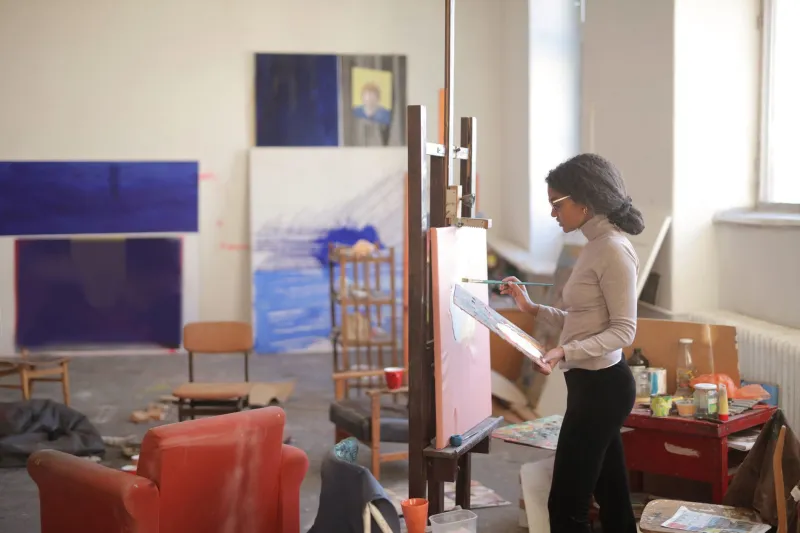
In a repurposed community center in Nashville, Tennessee, a group of children between the ages of six and fourteen gather on Saturday mornings. They are the children and grandchildren of Kurdish refugees and immigrants who arrived from Iraq, Syria, and Turkey over the past three decades. On the whiteboard at the front of the room, a teacher writes the Kurmanji word xwendin — to read — and asks the students to repeat it aloud. The sound fills the room, tentative at first, then stronger.
This is not a scene from a foreign country. It is the American diaspora at work, quietly and determinedly preserving a language that has survived centuries of suppression across the Middle East.
A Language With Deep Roots and a Fragile Future
Kurdish is not a single language but a family of closely related tongues, the two most widely spoken being Kurmanji — dominant among Kurdish communities from Turkey, Syria, and parts of Iraq — and Sorani, spoken primarily by Kurds from Iraqi Kurdistan and Iran. Linguists estimate that between 30 and 40 million people speak some form of Kurdish worldwide, making it one of the largest languages without an internationally recognized nation-state to anchor it.
In the United States, Kurdish communities are concentrated in cities such as Nashville, which hosts one of the largest Kurdish populations in the country, as well as in Lincoln, Nebraska; San Diego, California; and parts of the greater New York metropolitan area. The challenge these communities face is not unique to Kurds — it mirrors the experience of countless immigrant groups navigating the tension between assimilation and preservation — but it carries a particular urgency given the historical suppression of Kurdish language and culture in the countries many families fled.
"When my parents came here, they were told to forget Kurdish if they wanted to succeed," says Dilan, a 34-year-old Kurdish-American teacher in Nashville who asked that her last name not be used. "Now I am spending my weekends teaching it to other people's children, because we understand what is lost when a language disappears."
Community Schools Filling the Gap
Public schools in the United States are not equipped — nor, in most cases, mandated — to offer Kurdish language instruction. The responsibility has therefore fallen to community organizations, religious institutions, and individual families. Across the country, a loose but growing network of weekend language schools has emerged to fill this void.
The Kurdish Community of Tennessee, one of the oldest such organizations in the country, has operated a Saturday school for more than a decade. Its curriculum has evolved considerably over the years, moving from informal conversation classes to a more structured program that addresses reading, writing, and oral comprehension in Kurmanji. Instructors are largely volunteers — former teachers, university students, and community elders — who donate their time out of a shared conviction that the language must be passed on.
In Lincoln, Nebraska, a similar program operates under the umbrella of a local Kurdish cultural association. There, the emphasis is on Sorani, reflecting the Iraqi Kurdish background of most families in the region. The school's coordinator, who immigrated from Sulaymaniyah in the late 1990s, describes the challenge candidly: "The children speak English all week. They think in English. We have to make Kurdish feel alive and relevant, not like homework."
Digital Platforms and the New Classroom
Beyond physical classrooms, a new generation of digital tools is reshaping how Kurdish is taught and learned in America. YouTube channels dedicated to Kurmanji and Sorani instruction have accumulated tens of thousands of subscribers. Apps modeled on the gamified learning format popularized by platforms like Duolingo are in various stages of development, some created by Kurdish-American university students who recognized the gap in available resources.
One notable effort is the work of the Mesopotamia Cultural Center, which has developed an online curriculum combining video lessons, interactive exercises, and virtual tutoring sessions. The platform serves learners across the country who live in areas where no physical Kurdish school exists. For families in smaller cities or rural communities, it may be the only structured Kurdish language resource available.
Social media, too, has played an unexpected role. Kurdish-American creators on Instagram and TikTok regularly post short vocabulary lessons, cultural explainers, and conversations in dialect, reaching diaspora youth who might never enter a formal classroom setting. These informal touchpoints may lack pedagogical rigor, but linguists who study heritage language acquisition note that consistent, low-stakes exposure is among the most effective tools for maintaining passive comprehension.
What Linguists Say About Heritage Language Survival
Dr. Shirin Ahmadi, a sociolinguist at a midwestern university who studies Kurdish language preservation in diaspora communities, frames the challenge in generational terms. "The first generation almost always maintains the language fluently," she explains. "The second generation typically has functional but incomplete proficiency. By the third generation, in the absence of deliberate intervention, the language is often lost as a spoken tongue."
What makes Kurdish particularly complex, she notes, is the lack of a single standardized written form. Kurmanji is most commonly written in the Latin alphabet, while Sorani uses a modified Arabic script. Families from different regions may struggle to find materials that reflect their specific dialect, and children who learn one variety at school may find it difficult to communicate with grandparents who speak another.
Despite these obstacles, Dr. Ahmadi sees grounds for cautious optimism. "What I observe in the Kurdish-American community is a level of intentionality that is genuinely encouraging," she says. "Families are not simply hoping the language will survive — they are actively building the infrastructure to make it survive."
The Second Generation Speaks
For many young Kurdish-Americans, the decision to learn or reclaim the language is deeply personal. Sardar, a 22-year-old college student in San Diego whose family emigrated from Dohuk when he was four years old, describes the moment he decided to enroll in an online Kurmanji course. "I was at a family gathering and my grandmother was telling a story, and I could only understand about half of it," he recalls. "That feeling — of being on the outside of something that was supposed to be mine — was something I did not want to feel again."
His experience reflects a broader pattern observed by educators across the country: a growing cohort of second-generation Kurdish-Americans who are returning to the language not because they were raised with it, but because they are actively choosing it as adults.
Preserving Language as an Act of Resistance
The stakes of this work extend beyond sentiment. Language carries culture, memory, and worldview in ways that translation cannot fully replicate. Kurdish oral traditions — epic poetry, folk songs, proverbs passed between generations — exist most fully in their original tongue. When a language retreats, these traditions do not simply translate; they transform, and sometimes they disappear.
For the Kurdish-American educators and families working to reverse that process, the Saturday classrooms, the digital platforms, and the kitchen-table conversations are not merely language lessons. They are acts of continuity — a refusal to let the distance between here and there sever the thread that connects one generation to the next.
As the children in that Nashville community center repeat the word xwendin one more time, their teacher smiles. They are reading. And in doing so, they are keeping something alive.