Stories as Shields: How Kurdish-American Families Are Raising Resilient Children Through the Power of Narrative
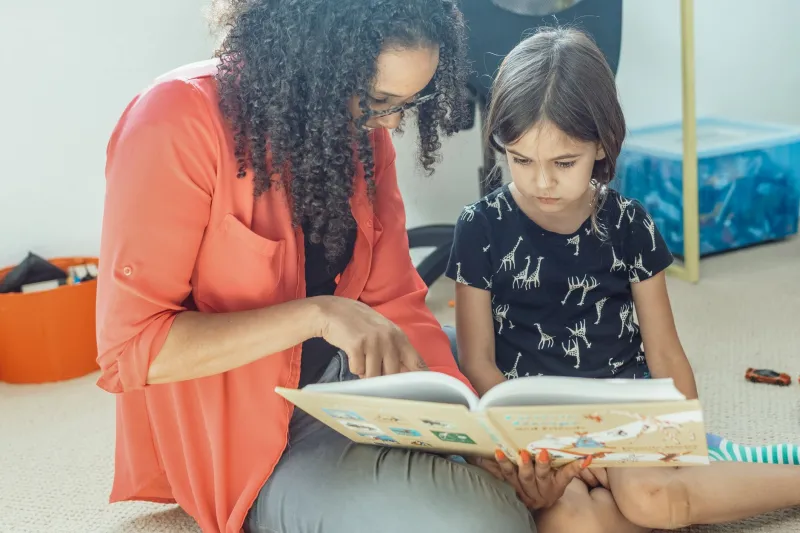
In a modest home in Nashville, Tennessee, a mother named Shirin sits beside her eight-year-old daughter each evening before sleep. She does not read from a book. She speaks — in Kurmanji first, then English — about her own grandmother, a woman who crossed mountain passes in the dead of winter carrying nothing but her children and the memory of a village that no longer exists on any official map. The story changes slightly with each telling, sharpened or softened depending on what the child seems ready to absorb. But its essence never wavers: we survived because we refused to disappear.
This is not nostalgia. It is instruction.
Across Kurdish-American communities — from the Kurdish enclaves of Nashville to the growing diaspora populations in San Diego, Chicago, and Northern Virginia — parents are engaging in a form of cultural pedagogy that operates almost entirely outside formal institutions. They are teaching their children to understand history, identity, and resistance not through textbooks, but through story.
The Architecture of a Deliberate Narrative
What distinguishes Kurdish-American family storytelling from casual reminiscing is its intentionality. Many parents interviewed by Rojda described a conscious architecture behind the stories they choose to tell — a deliberate sequencing of themes designed to build emotional and intellectual resilience over time.
"I don't just tell my kids what happened," explains Dilovan, a father of three in the Nashville area who came to the United States from the Kurdistan Region of Iraq in the early 2000s. "I tell them why it matters that they know. There's a difference. One is history. The other is a lesson about who they are."
This distinction — between recounting and meaning-making — is central to how Kurdish-American parents approach oral narrative. Stories about displacement, persecution, and survival are not shared to burden children with grief, but to equip them with a framework for understanding adversity as something their people have faced, navigated, and ultimately endured.
Many parents also describe a layering technique: beginning with stories that emphasize joy and ingenuity — tales of resourceful ancestors, beloved village celebrations, the humor that persisted even under occupation — before gradually introducing narratives of struggle. The effect is to establish cultural pride as the emotional foundation before introducing the weight of historical trauma.
Countering What the Classroom Leaves Unsaid
For Kurdish-American families, the urgency of home-based storytelling is amplified by a particular frustration: the near-total absence of Kurdish history in American educational curricula. When their children sit in classrooms learning about the Middle East, they encounter a geography that erases their people entirely — no Kurdistan on the map, no mention of the Anfal campaign, no acknowledgment of the ongoing statelessness that defines Kurdish political reality.
"My son came home from school once and said, 'Dad, we learned about Iraq today, but you weren't in it,'" recalls Karim, a Kurdish-American community organizer in San Diego. "That's the moment I understood what we were up against. The school wasn't lying to him. It just wasn't telling him the truth."
This absence creates what researchers in diaspora education sometimes call a "narrative vacuum" — a space where a child's identity exists without institutional acknowledgment or support. Kurdish-American parents are acutely aware of this vacuum, and many described their storytelling practices as a direct response to it.
Rather than simply filling in factual gaps, however, the most effective family narratives do something more sophisticated: they teach children how to read official histories critically. Parents recount stories that place their family's experience alongside — and sometimes in direct contradiction to — the dominant narratives children encounter in school. The message is not simply "here is what they left out," but rather "here is how to notice when a story is incomplete."
The Psychology of Inherited Resilience
The psychological dimensions of this storytelling practice are significant. Research in developmental psychology has increasingly recognized that children who possess a strong "family narrative" — a coherent story about who their family is, where they come from, and how they have overcome adversity — tend to demonstrate greater emotional resilience and a more stable sense of self.
For second-generation Kurdish-Americans navigating the particular pressures of dual identity — simultaneously American and Kurdish, simultaneously at home in this country and connected to a homeland many have never visited — this narrative grounding can be especially consequential.
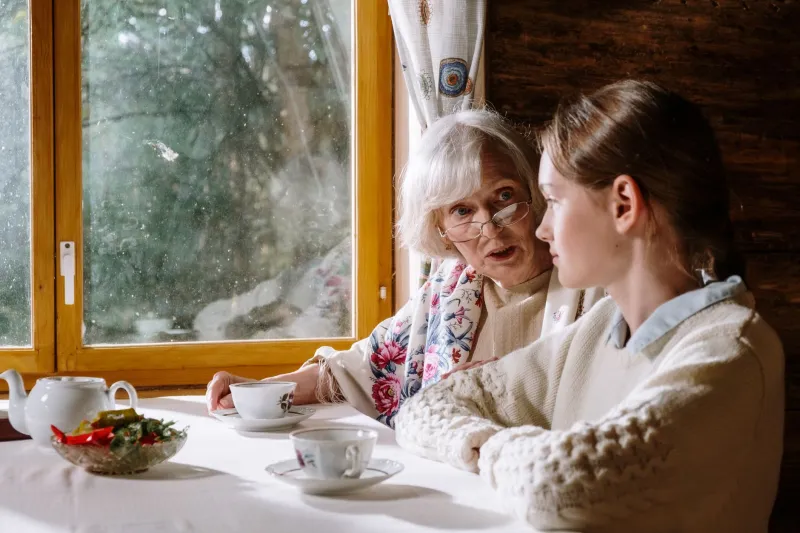
Shirin, the Nashville mother, notices the effects in her daughter's confidence. "She knows she comes from people who did not break," she says. "When other kids say something dismissive about where she's from, she doesn't feel ashamed. She feels like they simply don't know what she knows."
This is not defiance for its own sake. It is the psychological infrastructure of dignity.
The Stories That Teach Justice
Beyond resilience, many Kurdish-American parents are using narrative to cultivate in their children a specific moral vocabulary — one rooted in the Kurdish experience of statelessness, political persecution, and international indifference.
Stories about the 1988 Halabja chemical attack, the forced displacement of Kurdish villages in Turkey, or the decades-long struggle for recognition are not merely historical lessons. They are ethical ones. Parents describe using these narratives to open conversations about justice, about the obligations of those who survive, and about the meaning of solidarity with other communities who face similar erasures.
"I want my children to understand that what happened to us is not unique in the world," says Narin, a Kurdish-American mother in Chicago whose family came from southeastern Turkey. "I tell them about our history so they can recognize injustice when they see it — anywhere, for anyone. That's what the stories are really for."
This progressive dimension of Kurdish-American family storytelling — its capacity to extend empathy outward, to connect Kurdish experience to broader struggles for recognition and rights — reflects a community that sees its own history not as a wound to nurse privately, but as a lens through which to engage the world.
Keeping the Form Alive
The challenge, as with so many aspects of cultural transmission in the diaspora, is continuity. As second-generation Kurdish-Americans grow into adulthood and form their own families, the question of whether they will carry these storytelling practices forward is an open one.
Some community organizations in cities like Nashville and San Diego have begun hosting intergenerational storytelling events — evenings where elders share narratives with younger members of the community in structured settings, creating a bridge for families who may have lost immediate access to their oral traditions. These gatherings function as both cultural preservation and community-building, acknowledging that storytelling, at its most powerful, is never a solitary act.
For Dilovan, the answer lies in making the practice feel less like a duty and more like a gift. "I don't sit my kids down and say, 'Now we will learn about our history,'" he says, laughing softly. "I just tell them a story. And I make it good enough that they ask for another."
That, perhaps, is the oldest pedagogical wisdom of all: a story worth telling is a story worth keeping. In Kurdish-American homes across this country, that wisdom is being practiced with extraordinary deliberateness — one evening, one narrative, one child at a time.