From the Neighborhood to the Capitol: How Kurdish-Americans Are Forging a New Political Generation
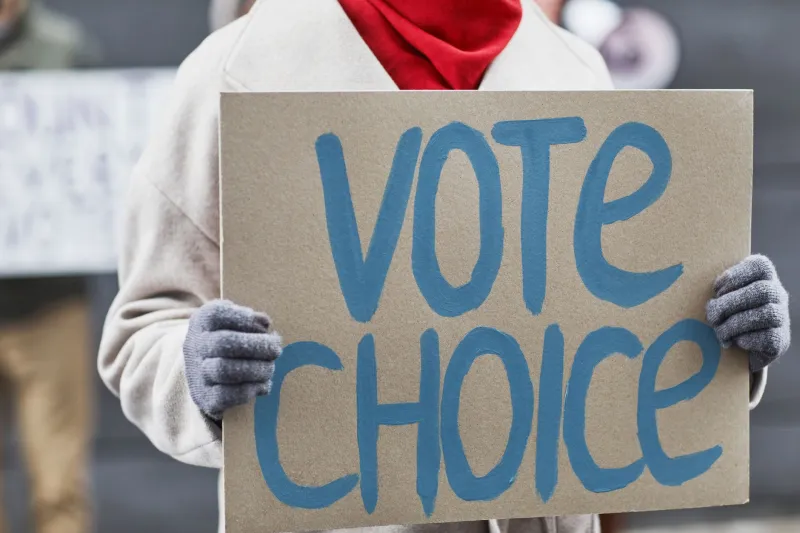
For decades, the dominant story of Kurdish life in America has centered on preservation — of language, of memory, of a homeland that exists, for many, more as longing than as geography. That story remains vital. But alongside it, a newer and perhaps more urgent narrative is taking shape: one in which Kurdish-Americans are not merely protecting what they carry from the past, but actively constructing the political infrastructure of their future.
In cities from Nashville to San Diego, from the suburbs of Detroit to the neighborhoods of Minneapolis, Kurdish-American organizers, candidates, and civic leaders are entering electoral politics, building coalitions, and demanding representation in the institutions that govern daily American life. The shift is neither accidental nor sudden. It is the product of years of community-building, frustration with invisibility, and a deepening conviction that cultural identity, unaccompanied by political voice, offers only partial belonging.
The Long Road From Advocacy to Electoral Politics
Many of the Kurdish-Americans now running for office or leading grassroots organizations began their civic lives in a familiar place: cultural associations, refugee resettlement nonprofits, and heritage festivals. These spaces taught them how to organize, how to communicate across difference, and how to hold a community together under pressure. They also revealed the limits of advocacy conducted entirely outside formal political structures.
"You can hold a rally, you can publish a report, you can testify at a city council meeting," says one Kurdish-American organizer based in Tennessee who has spent the past several years building a voter registration network among Kurdish-speaking residents. "But if no one at that table looks like you or knows your name, you are still a guest in a conversation about your own life."
That sentiment has driven a measurable turn toward electoral engagement. Kurdish-American communities — particularly in states with significant diaspora populations — have begun investing in voter education campaigns conducted in Kurmanji and Sorani, supporting candidates from within their ranks, and cultivating relationships with sympathetic elected officials who can serve as allies on both domestic policy and international concerns affecting the Kurdish homeland.
Translating Heritage Into a Political Platform
What distinguishes Kurdish-American political organizing from generic immigrant civic engagement is the degree to which cultural identity informs policy priorities. For many Kurdish-American leaders, issues that might appear local — affordable housing, public school funding, language access services — are inseparable from the broader project of community dignity and survival.
In Nashville, which hosts one of the largest Kurdish populations in the country, community leaders have pushed municipal officials to expand interpreter services in public schools and healthcare settings, a campaign rooted as much in cultural self-determination as in practical necessity. In the Detroit metropolitan area, Kurdish-American residents have organized around equitable economic development in neighborhoods where Kurdish-owned businesses have become anchors of commercial life.
These campaigns are not framed narrowly as "Kurdish issues." Their architects are deliberate about building multiracial, multi-ethnic coalitions, understanding that political durability in American cities requires solidarity across communities of color and immigrant populations. Kurdish-American organizers have found common cause with Arab-American, Somali-American, and Latino advocacy groups, forging alliances that amplify all of their voices.
A New Generation Steps Forward
Perhaps the most striking development is the emergence of Kurdish-Americans willing to place their names on ballots. Candidates have pursued or won seats on school boards, city councils, and local commissions in several states. Their campaigns tend to emphasize the same themes: representation, equity, and the importance of lived experience in public decision-making.
For these candidates, running is itself a form of cultural statement. To appear on an American ballot with a Kurdish name — often unfamiliar to poll workers and voters alike — is to insist on visibility in the most concrete possible way. Several have described the experience of knocking on doors and explaining their backgrounds as an unexpected form of cultural education, one that humanizes the Kurdish story for neighbors who may have encountered it only through news coverage of conflict and displacement.
"People are surprised, and then they are curious," one candidate who ran for a suburban school board seat in the Midwest reflected. "By the end of the conversation, they know something real about who we are. That matters. That changes something."
The Challenges That Remain
The path is not without obstacles. Kurdish-Americans navigate the same structural barriers that confront all underrepresented communities entering electoral politics: limited access to donor networks, the demands of name recognition in majority-white districts, and the difficulty of mobilizing a community whose members are often still navigating the demands of economic survival and civic unfamiliarity.
There is also the particular complexity of Kurdish political identity itself. Kurdish-Americans come from Iraq, Turkey, Syria, and Iran, carrying with them distinct dialects, political histories, and, sometimes, divergent views on the international questions that bear most directly on their communities of origin. Building a unified political bloc across those differences requires ongoing and careful negotiation.
Some leaders caution against the assumption that electoral success alone constitutes empowerment. Genuine political power, they argue, must be rooted in organized community capacity — in the civic infrastructure of associations, mutual aid networks, and cultural institutions that sustain collective life between election cycles.
Heritage as Civic Fuel
What unites the Kurdish-Americans reshaping American political landscapes — whether they are registering voters, running for office, or building the organizational sinews of a movement — is a conviction that their heritage is not a burden to be managed but a resource to be mobilized. The values embedded in Kurdish communal life: solidarity, resilience, the fierce protection of collective identity in the face of erasure, translate with surprising directness into the language of democratic organizing.
The diaspora, in this reading, is not simply a community waiting for recognition. It is a community actively producing the leaders, the strategies, and the moral clarity that American democratic life, at its best, is meant to reward.
The work is generational. Its outcomes are not yet written. But the Kurdish-Americans engaged in it are not waiting for permission to begin.