A Name Is a Homeland: How Kurdish-American Parents Are Turning Baby Names Into Acts of Cultural Defiance
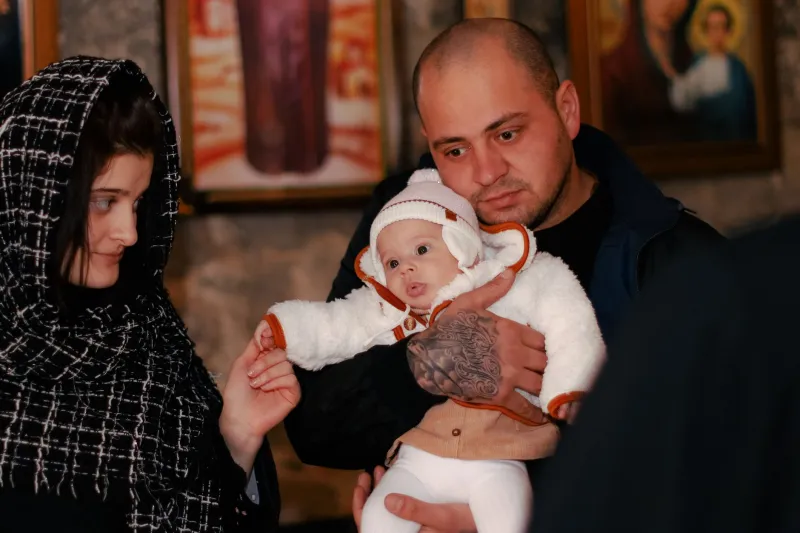
When Shirin Rostami and her husband Aryan sat down with a blank notepad in their Chicago apartment three years ago, they were not simply choosing what to call their soon-to-be daughter. They were deciding, in a very deliberate way, who she would be allowed to become.
"We went back and forth for weeks," Shirin recalls. "Every name we loved had a story attached to it — a grandmother, a village, a piece of language. But we also kept asking ourselves: will her teachers be able to say it? Will she spend her whole life correcting people?"
They named their daughter Rojin — meaning "light" in Kurdish — and have not second-guessed it since. "She is going to know exactly where she comes from," Shirin says. "That feels more important than convenience."
This deliberation is not unique to the Rostami family. Across the United States, from Nashville to San Diego, Kurdish-American parents are navigating one of the most intimate and politically charged decisions of their lives: what to name their children in a country that has historically flattened, mispronounced, or quietly anglicized names it finds unfamiliar.
The Weight a Name Carries
In Kurdish tradition, names are rarely arbitrary. They carry geographic memory, encode family lineage, invoke nature, and sometimes memorialize loss. Names like Berivan (shepherdess), Delal (beloved), Soran (a Kurdish principality), and Azad (freedom) are not decorative choices — they are biographical statements.
Dr. Layla Khalaf, a linguist who works with diaspora communities at a university in Michigan, explains that for stateless peoples, naming practices take on an outsized significance. "When a nation-state does not recognize you, when your language has been banned in countries you came from, the name you give your child becomes a form of territorial claim," she says. "It says: we exist, we have a history, and we are not going to erase it for your comfort."
This is not a theoretical observation. Kurdish languages were suppressed for decades in Turkey, Syria, and Iran — in some cases, Kurdish names were legally prohibited. Parents who lived through those eras, or whose own parents did, carry that memory into American maternity wards with them.
Pronunciation as Politics
The challenge, of course, is that American institutions — schools, pediatric offices, HR departments — are not always equipped to receive names that do not follow English phonological patterns. Kurdish names often feature sounds that English speakers find unfamiliar: the rolled "r," the guttural "x" (a sound similar to the Scottish "loch"), and vowel combinations that resist easy anglicization.
Nariman Azizi, a cultural advisor who works with Kurdish communities in the Nashville area, has seen firsthand how mispronunciation affects children. "By the time a Kurdish kid is in third grade, they have already been through dozens of moments where a teacher stumbles over their name, or a classmate laughs, or someone just starts calling them 'Nick' or 'Sara' without asking," he says. "That accumulates. It tells a child that the part of them that is Kurdish is inconvenient."
Some parents, particularly those who arrived in the United States as refugees with limited institutional support, made the painful calculation to give their children names that would pass unnoticed — or to use Kurdish names at home while registering English names on official documents. This practice, common across many immigrant communities, reflects a survival logic that parents rarely describe without some degree of grief.
"My parents named me Kevin on my birth certificate," says one Kurdish-American man in his late thirties who asked that only his Kurdish name, Kawa, be used in this article. "My real name — the name my grandparents gave me — was never on a single legal document until I changed it myself at thirty-two. That was one of the most emotional days of my life."
Honoring the Ancestors
For many Kurdish-American families, the naming decision is also an intergenerational conversation. Grandparents, whether still living abroad or resettled in the United States, often hold strong expectations about naming customs. In some Kurdish traditions, the firstborn son carries the name of the paternal grandfather; daughters may honor maternal grandmothers. These conventions create a living thread between generations.
Sevim Dogan, a grandmother living in Detroit who immigrated from southeastern Turkey in the 1990s, describes the joy she felt when her daughter named a grandchild after her own mother. "That name traveled from a village I may never see again to this city," she says. "It did not get lost. That matters more than I can say."
Yet these traditions can also create tension when the names in question are genuinely difficult for American institutions to process. Families describe negotiating between grandparents who feel that any compromise is a betrayal and younger parents who are trying to protect their children from the friction of daily mispronunciation.
Dr. Khalaf suggests that this tension reflects a broader question facing diaspora communities everywhere. "How much do you adapt in order to survive, and how much do you hold firm in order to remain yourself? There is no clean answer. But the fact that families are asking the question so seriously is itself a form of cultural vitality."
A New Generation Pushing Back
There are signs that the calculus is shifting — particularly among younger Kurdish-Americans who came of age during a broader cultural reckoning around identity, representation, and the politics of assimilation.
Social media has played a meaningful role. Kurdish-American creators on platforms like TikTok and Instagram have posted videos teaching viewers how to pronounce Kurdish names correctly, generating hundreds of thousands of views and comment sections filled with people sharing their own experiences of name erasure. The message is consistent: your name is not a burden. It is a birthright.
"I see so many young parents in our community who are done apologizing for their names," says Nariman Azizi. "They are naming their kids Rojhat, Berxwedan, Gulistan — names with real weight — and they are prepared to teach every teacher, every coach, every pediatrician how to say it properly. That confidence is new. And it is powerful."
Shirin Rostami, for her part, has already begun preparing her daughter Rojin for the conversations ahead. "I tell her: your name means light. And light does not dim itself so that other people are not dazzled. You say it clearly, you say it proudly, and you help people learn."
What We Call Ourselves
A name, at its most fundamental, is an act of recognition — a declaration that a person exists and belongs to something larger than themselves. For Kurdish-American families navigating life in a country that rarely makes space for their history in its classrooms or its headlines, the name written on a birth certificate can feel like the first sentence of a story they are determined to tell on their own terms.
The names Kurdish parents choose for their children are not simply labels. They are, as Dr. Khalaf puts it, "portable homelands" — places that travel with a person regardless of what passport they carry or what country refuses to recognize the one they came from.
In that sense, every Rojin, every Kawa, every Berivan born in an American hospital is carrying something ancient and irreplaceable into the future. And the parents who gave them those names knew exactly what they were doing.