Dual Classrooms: How Kurdish-American Families Are Building the Education System Their Children Deserve
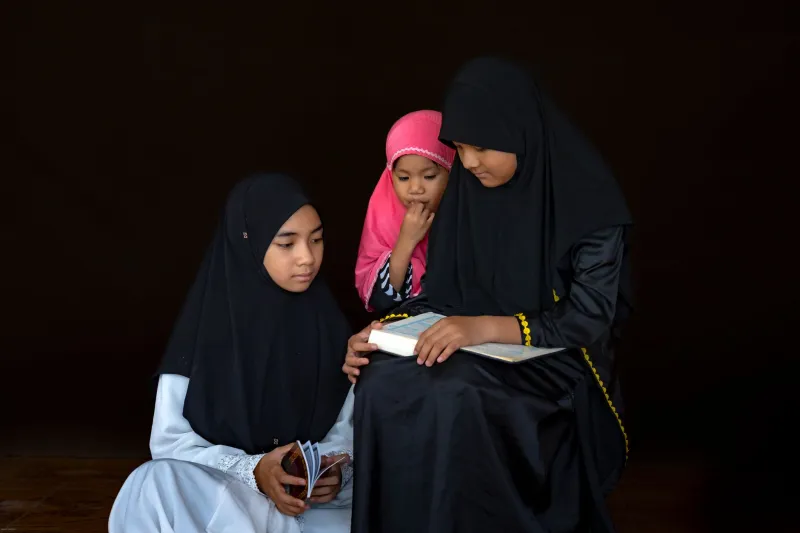
On a Saturday morning in Nashville, Tennessee, a dining room table has been transformed into something resembling a seminar space. Printed maps of Kurdistan sit beside spiral notebooks. A grandmother speaks slowly in Kurmanji while her twelve-year-old grandson — an honor roll student at his local middle school — carefully transcribes the words she uses for seasons, for rivers, for the names of mountains he has never visited but somehow knows by heart. His mother, Shirin, watches from the kitchen doorway. "He learns about the American Revolution every year," she says quietly. "But nobody is going to teach him about Halabja."
This scene, replicated in apartments, community centers, and living rooms from San Diego to Detroit, captures a reality that Kurdish-American families navigate with both determination and exhaustion: the American educational system, for all its strengths, was not built with their children in mind. And so, with characteristic resourcefulness, these families have built something alongside it.
What the Curriculum Leaves Out
The gaps are not incidental. Kurdish history — spanning the collapse of the Ottoman Empire, the broken promises of the Treaty of Sèvres, decades of displacement, and the ongoing struggle for political recognition across four countries — is essentially absent from standard American K-12 curricula. The Kurdish people, numbering between 30 and 40 million worldwide, represent one of the largest stateless ethnic groups on earth, yet their story rarely merits more than a footnote in even the most comprehensive world history textbooks.
For Kurdish-American students, this erasure carries a particular weight. It is one thing to learn that your heritage is underrepresented. It is another to sit in a classroom where a teacher's offhand description of "the Middle East" flattens an entire landscape of distinct peoples, languages, and civilizations into a single, undifferentiated mass. Many Kurdish-American young people describe a persistent sense of invisibility — present in the building, absent from the story.
"My daughter came home once and said, 'Mom, are we Arab?'" recalls Peri, a mother of three living outside Chicago. "Her teacher had lumped everyone from the region together. I wasn't angry at the teacher — she simply didn't know. But I realized that if I didn't fill in those blanks, no one would."
The Architecture of Informal Learning
What Kurdish-American families have constructed in response is not a single institution but a constellation of practices — some formal, many improvised, all intentional.
In several cities with significant Kurdish populations, including Nashville, Lincoln, Nebraska, and parts of Northern Virginia, community organizations have established weekend language schools that meet with the consistency and seriousness of academic programs. These schools teach both Kurmanji and Sorani dialects, depending on regional heritage, and frequently incorporate lessons in history, geography, and oral tradition. Enrollment has grown steadily over the past decade, driven in large part by parents who came of age in the diaspora and feel the urgency of transmission more acutely than earlier generations.
Beyond formal institutions, informal study circles have taken root in homes and community centers. These gatherings — sometimes organized around specific texts, sometimes around conversation and storytelling — function as a kind of supplemental humanities education. Elders share accounts of village life, of migration, of political upheaval. Younger members bring questions shaped by their American schooling, and the dialogue between those two frameworks produces something neither could generate alone.
Digital tools have expanded the reach of these networks considerably. WhatsApp groups connect Kurdish-American parents across time zones, sharing educational resources, recommended books, documentary films, and strategies for talking to children about complex historical trauma. YouTube channels run by Kurdish educators in both the diaspora and the homeland provide language instruction that families can access on their own schedules. The informal economy of knowledge-sharing that once operated block by block now functions across the entire country.
Navigating Two Systems at Once
The logistical demands on Kurdish-American families are considerable. Parents who work multiple jobs still carve out time to sit with their children and review vocabulary, history, or cultural practices that the school week cannot accommodate. The pressure is compounded by the awareness that academic performance in the American system carries real consequences — college admissions, professional opportunities, economic mobility — and that cultural education, however vital, must not come at the cost of those prospects.
Many families describe a careful choreography. Homework comes first. Then, perhaps over dinner or before bed, comes the other education: a story told in Kurdish, a question about where the family came from, a photograph passed around with names attached. It is not always seamless. Teenagers, in particular, sometimes resist what feels like an additional burden layered onto an already demanding school schedule. Parents acknowledge the tension without dismissing it.
"I tell my son that knowing who you are is not extra credit," says Karwan, a father and civil engineer living in the Dallas-Fort Worth area. "It is the foundation. Everything else is built on top of it."
Some families have found allies within the American school system itself — teachers willing to incorporate Kurdish history into broader units on the Middle East or human rights, librarians who stock their shelves with books that reflect diverse heritage, school counselors who understand the particular pressures of navigating a bicultural identity. These partnerships, though still rare, suggest that the parallel educational project Kurdish families have built need not remain entirely separate from the institutions their children attend daily.
The Language Question
Perhaps no dimension of this parallel curriculum is more freighted than language. Kurdish languages — Kurmanji, Sorani, Zazaki, and others — carry within them not just communication but cosmology. The words for certain concepts, certain relationships, certain ways of understanding the natural world do not translate cleanly into English. Parents who allow those languages to recede from daily life often find, years later, that something irreplaceable has gone with them.
The challenge is structural as well as personal. Kurdish is not offered in American public schools. Heritage language programs that serve Spanish, Mandarin, or Arabic speakers have no equivalent for Kurdish communities. The burden of linguistic transmission falls entirely on families and community organizations, without institutional support or recognition.
And yet the language persists. Children who grow up hearing Kurdish spoken at home, who learn to read it in weekend schools, who use it to communicate with grandparents in the homeland, carry it forward with a kind of fierce loyalty. For many of them, speaking Kurdish is itself a political act — a refusal of erasure, a declaration of continuity.
An Education in Resilience
What Kurdish-American families are building, across kitchen tables and community halls and group chats, is not simply a supplement to American schooling. It is a comprehensive education in identity, resilience, and the long view of history. It teaches children that belonging is not a binary condition — that one can be fully American and fully Kurdish, that these identities do not compete but compound.
For the children themselves, the rewards of this dual education often become clearer with time. Many Kurdish-American young adults describe the parallel curriculum of their childhoods not as a burden but as a gift — an inheritance of context that allowed them to understand themselves, their families, and their place in the world with a depth that no single classroom could have provided.
The dining room table in Nashville is still set. The maps are still spread out. The grandmother is still speaking, and the grandson is still listening. The lesson is not yet finished.