Whisper Networks and Mother Tongues: The Hidden Classrooms Keeping Kurdish Dialects Alive in America

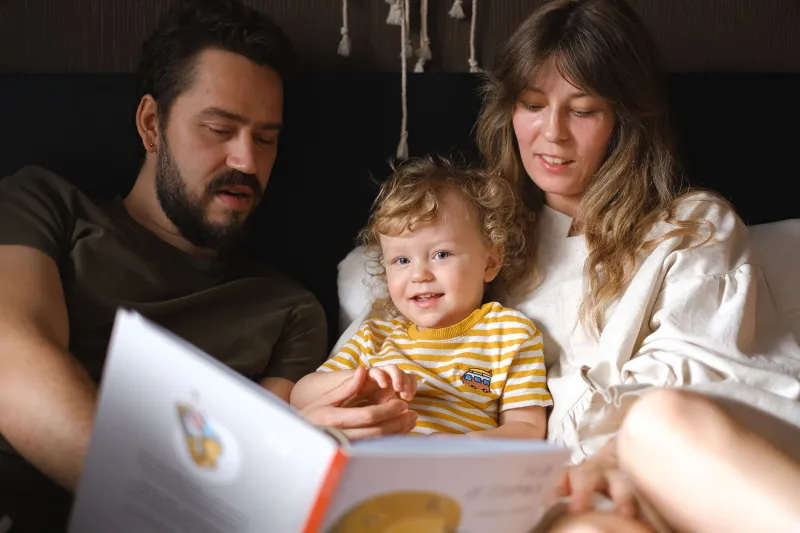
On a Saturday morning in a suburb of Nashville, Tennessee, eleven children sit in a circle on a living room floor. There are worksheets, yes, but also a grandmother's voice — low, deliberate, almost ceremonial — reciting words that no dictionary currently in print has fully catalogued. The woman leading this session, a retired seamstress who arrived in the United States from the Badini-speaking regions of northern Iraq more than two decades ago, does not hold a teaching credential. What she holds, her family insists, is something rarer: the last fluent command of a specific regional register of Kurmanji that her grandchildren are at serious risk of never inheriting.
This scene, or something very close to it, is repeating itself in dozens of American cities — Nashville, Columbus, Lincoln, San Diego, Nashville, and beyond — wherever Kurdish diaspora communities have taken root. What is unfolding is not a formal language-preservation program. There is no federal grant behind it, no university partner, no press release. It is, by design and by necessity, almost entirely invisible.
A Language Family Under Pressure
Kurdish is not a single language. It is a family of related tongues — Kurmanji, Sorani, Zazaki, Gorani, Badini, and several further regional varieties — spoken across a geographic arc that spans parts of Turkey, Iraq, Iran, and Syria. In the United States, the Kurdish-American population, estimated conservatively at several hundred thousand individuals, reflects this linguistic diversity. Many arrived as refugees from distinct regions, carrying not just different dialects but different scripts, different oral literary traditions, and different cultural vocabularies.
The problem is that American institutions — schools, universities, settlement agencies — tend to treat Kurdish, when they acknowledge it at all, as a monolithic category. Kurmanji instruction is occasionally available; Sorani somewhat less so. But the smaller, more geographically specific dialects — the varieties spoken in particular mountain valleys, border towns, and rural communities — receive virtually no institutional support whatsoever. For speakers of these dialects, the United States offers no formal pathway to transmission. The responsibility falls entirely on community.
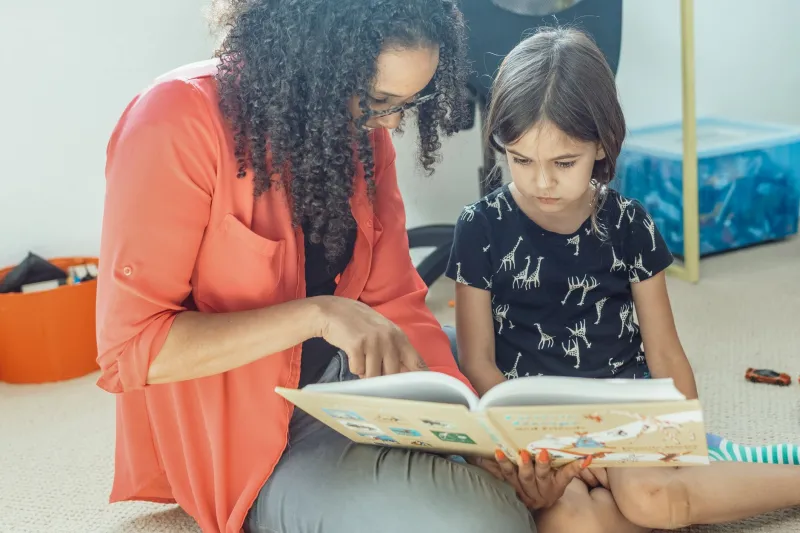
"When my dialect disappears, it is not just words that go," says one language keeper in Columbus, Ohio, who asked to be identified only by her first name, Berfin. She teaches Zazaki to a group of eight students, ranging in age from seven to forty-two, out of her apartment every other Sunday. "It is jokes that cannot be translated. It is the way we describe the color of a specific sky. It is my grandmother, gone again."
The Architecture of an Informal Network
The networks sustaining these classes are built on trust, proximity, and, increasingly, technology. WhatsApp groups serve as scheduling tools, vocabulary repositories, and emotional support systems. Zoom sessions connect language keepers in one city with diaspora members in another. Voice memos of elders reciting proverbs circulate through private channels, archived against the day when the speaker is no longer available.
In Lincoln, Nebraska — home to one of the largest Kurdish refugee populations in the country — a loose coalition of families has organized what they call, with deliberate understatement, a "study circle." It meets in rotation across three households and has been running, without interruption, for six years. The organizers have developed their own informal curriculum: seasonal vocabulary tied to agricultural traditions that no longer exist in the students' daily lives, folk songs whose melodies serve as mnemonic devices, and structured conversation exercises built around family history rather than textbook scenarios.
"We are not trying to teach language as an abstract subject," explains one of the circle's organizers, a civil engineer by profession. "We are teaching language as a container. The dialect holds things inside it that cannot survive translation into English, or even into standard Kurmanji. If you lose the container, you lose what is inside."
The Generational Fault Line
Not every family navigates this effort without friction. Language preservation work, particularly in immigrant communities, frequently collides with the pressures of assimilation, the demands of American schooling, and the very human desire of young people to belong to the world immediately around them.
Teenagers, several language keepers acknowledge, are the most difficult cohort to reach. English dominates their social lives. Their Kurdish, when they speak it at all, is often a hybrid — grammatically simplified, heavily borrowed from English, and stripped of the dialectal specificity their grandparents prize. Some resist the informal classes openly. Others attend but disengage. A few, particularly those who have experienced bullying or othering in American schools, have developed a complicated relationship with visible markers of Kurdish identity, language among them.
"I understand it," says Berfin, reflecting on a student who stopped attending her Zazaki sessions after starting high school. "America asks you to choose. And choosing your heritage costs something real. I cannot pretend otherwise."
Yet language keepers also report a counter-trend: a cohort of young Kurdish-Americans in their twenties and thirties who are returning to dialect study with a passion that surprises even their elders. Driven by a mix of identity politics, cultural pride, and grief over what has already been lost, these younger adults are becoming the movement's most committed students — and, in some cases, its emerging teachers.
What Formal Institutions Cannot Provide
The limitations of institutional language education are not merely logistical. They are, in a meaningful sense, philosophical. University Kurdish-language programs — where they exist — are designed around standardized written forms. They produce students who can read and write; they do not necessarily produce speakers who can participate in the oral traditions, the humor, the coded registers of intimacy that define a living dialect.
Informal networks operate differently. They teach through immersion, through repetition, through the irreplaceable medium of relationship. A grandmother correcting a grandchild's pronunciation carries a weight that no textbook exercise can replicate. A folk tale told in the original dialect, with all its untranslatable idioms intact, transmits something that a translated summary fundamentally cannot.
Several language keepers have begun collaborating with academic linguists — researchers at American universities who study endangered languages — to create informal documentation of their dialects. Audio recordings, word lists, grammatical notes. These are not publication-ready archives. They are survival documents, created in the hope that even if the living community of speakers shrinks beyond recovery, something will remain.
The Stakes of Silence
Linguists estimate that a language or dialect effectively dies when it ceases to be acquired naturally by children. By that measure, several Kurdish dialects spoken within American diaspora communities are already in their final generation of native speakers. The children in Nashville's living room circle, the teenagers in Lincoln's rotating study group, the twenty-somethings returning to Zazaki in Columbus — they represent, in the starkest possible terms, a last chance.
The language keepers running these hidden classrooms are not naive about the odds. They understand that American life exerts a gravitational pull toward English, toward standardization, toward the erasure of particularity. They understand that their students will live most of their lives in a language that has no word for what they are trying to preserve.
But they continue, Saturday after Saturday, Sunday after Sunday, in living rooms and basements and on screens that glow in the dark. They continue because they believe, with a conviction that requires no institutional validation, that what they are doing matters — that a dialect is not merely a communication system but a civilization in miniature, and that its disappearance is a loss the world does not yet have adequate language to mourn.
"We do not need permission to teach our children who they are," says Berfin, closing her notebook at the end of a session. "We just need time. And each other."
For now, that is what they have.