Words Without Borders: The Kurdish Concepts That Refuse to Be Translated
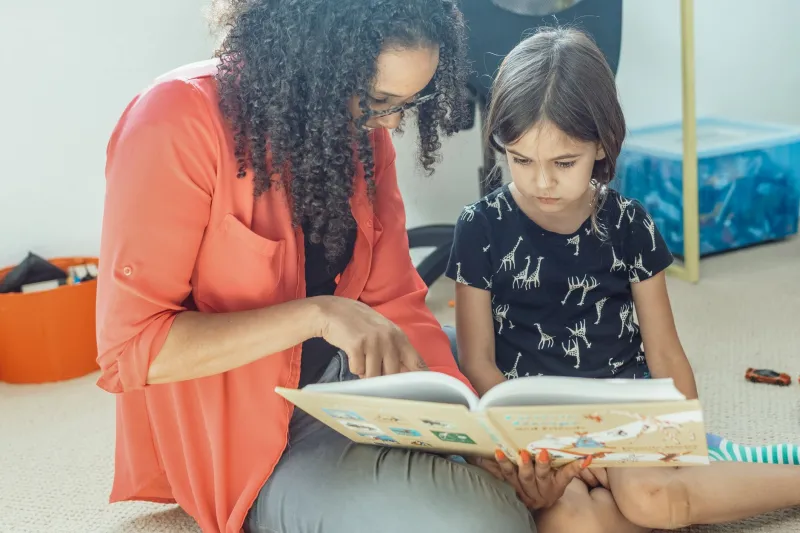
There is a particular moment that many Kurdish-American parents describe with striking consistency. Their child — born in Nashville or Minneapolis or San Diego, equally fluent in playground slang and dinner-table Kurdish — asks a simple question: What does that word mean in English? The parent opens their mouth. And then pauses. Not because the answer is complicated, but because the answer, in any honest sense, does not exist.
Language is never merely a code. It is a map of a culture's inner life, a record of what a people have found necessary to name. And Kurdish, spoken across a vast and fragmented geography, has named things that English — shaped by entirely different histories, geographies, and social arrangements — has never needed to. The result, for families living between two linguistic worlds, is a series of small daily encounters with the untranslatable: moments where meaning pools at the edge of one language and cannot cross over.
The Weight of Xweşî
Consider the Kurdish word xweşî. At its most surface level, it gestures toward something like wellness, pleasure, or goodness. But to render it simply as "happiness" or "well-being" is to flatten it almost beyond recognition. Xweşî carries within it a sense of rightness — a state in which a person, a family, or a community is in proper relation with itself and the world around it. It is not merely the absence of suffering; it is the presence of a particular kind of flourishing that is fundamentally communal in character.
For Kurdish-American parents, explaining xweşî to a child raised in a culture that tends to locate happiness as an individual achievement can feel like trying to describe a color to someone who has only ever seen in black and white. "I can tell her it means 'happiness,'" said one mother in the Chicago area, who asked that her name not be used. "But then she thinks it's about her feeling good. And that's not really it at all. It's about us feeling good. The whole family. The whole community."
This distinction — between individual and collective emotional states — runs through many of the most resistant Kurdish words. It reflects a philosophical orientation that is not easily imported into American English, which has, over centuries, developed a remarkably individuated emotional vocabulary.
Keser and the Grief That Has No English Address
If xweşî resists translation because it is too expansive, other Kurdish words resist because they are too precise. Keser is one such word. Often loosely rendered as "sorrow" or "grief," it describes something more specific: the particular ache of longing for something or someone that is absent — not the sharp pain of fresh loss, but the settled, chronic weight of a wound that has become part of the landscape of one's life.
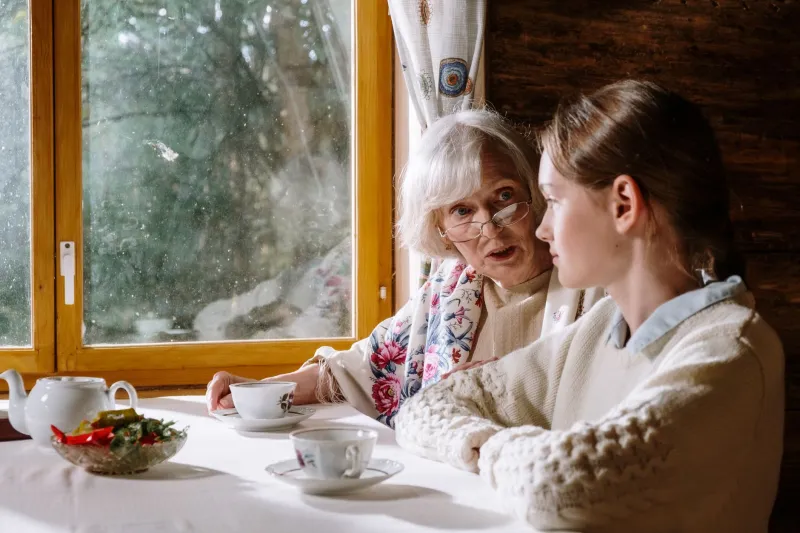
For Kurdish communities whose histories are marked by displacement, political persecution, and the forced scattering of families across continents, keser is not an abstract concept. It is a lived condition. It names the feeling of the grandmother who has not seen her village in forty years, the uncle who carries the memory of a language his grandchildren will not speak, the teenager in Detroit who cannot fully explain to her American friends why certain songs make her mother weep.
"English has words like 'nostalgia' and 'melancholy,'" observed Dr. Shirin Karimi, a linguist at a Midwestern university who has studied Kurdish diaspora language practices. "But they don't carry the political and collective dimension that keser holds for Kurdish speakers. When you say keser, you are not just naming a private feeling. You are locating yourself within a shared history of loss."
This is the dimension that translation most consistently fails to carry: the way Kurdish emotional vocabulary is inseparable from Kurdish historical experience.
What Diaspora Does to Words
It would be a mistake, however, to frame this story entirely as one of loss. Language in diaspora does not simply erode — it transforms, adapts, and occasionally invents. Kurdish-American families are not passive custodians of a fixed linguistic inheritance. They are active participants in an ongoing process of linguistic negotiation.
Some untranslatable words, rather than disappearing from children's vocabularies, are acquiring new layers of meaning in the American context. Heval — a word that encompasses friend, comrade, and ally in ways that no single English word replicates — has taken on particular resonance among younger Kurdish-Americans who are active in social justice movements. The word's implicit sense of solidarity across difference, its refusal to separate personal affection from political commitment, speaks directly to the experiences of young people navigating coalition politics in American cities.
"I use heval with my non-Kurdish friends too, sometimes," said one college student in the Washington, D.C. area. "And when I explain what it means — that it's not just a friend but someone you're in struggle with — people get it. They want a word like that. English doesn't really have it."
This is one of the more quietly remarkable phenomena in Kurdish-American communities: the untranslatable word that finds unexpected purchase in a new cultural soil, not because it has been translated, but because it has been shared in its original form, with its original weight intact.
Raising Children Inside the Gap
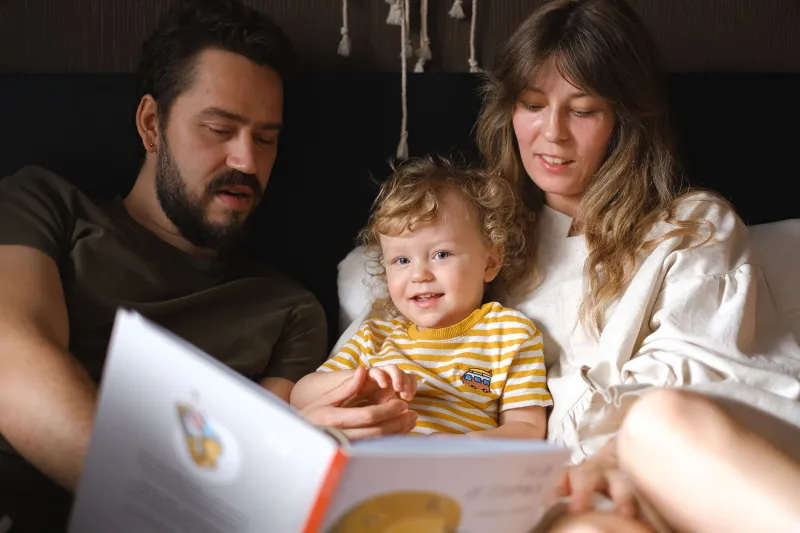
For parents, the untranslatable is both a challenge and a resource. Many Kurdish-American families make a conscious decision not to reach for the English approximation when a Kurdish word resists it. Instead, they teach the word itself — and then teach the world the word comes from.
This approach, which linguists sometimes describe as "concept-first" language transmission, treats untranslatable words not as problems to be solved but as invitations to deeper cultural understanding. A child who learns keser without being told it means "sadness" is a child who has been given access to a different way of understanding emotional experience — one rooted in collective history rather than individual psychology.
"When I teach my son these words, I'm not just teaching him Kurdish," said a father in the Nashville Kurdish community. "I'm teaching him a way of seeing. I'm teaching him that there are things in our culture that are worth protecting precisely because they don't translate. Because they belong to us."
This sense of linguistic ownership — the idea that untranslatability is a form of cultural sovereignty — recurs throughout conversations with Kurdish-American families. In a country that has historically demanded assimilation as the price of belonging, the word that cannot be rendered in English is, paradoxically, a form of resistance. It is proof that something persists, intact, on the other side of the translation.
The Horizon of Meaning
Language scholars have long recognized that translation is never a simple transfer of meaning from one container to another. It is always, at some level, an act of interpretation — and therefore an act of loss. What Kurdish-American families are navigating, generation by generation, is not a failure of language but a testament to the depth and specificity of a culture that has survived, across centuries and continents, by naming its own experience with extraordinary precision.
The words that cannot cross the border are, in their way, the most faithful keepers of what Kurdish culture is. They hold the things that have not yet been taken, standardized, or absorbed. They are, to borrow a phrase one Kurdish-American poet used in a recent reading in Chicago, "the words that remember what the maps forgot."
For families raising children between two languages, the untranslatable is not a gap to be closed. It is a threshold to be honored — a place where one world ends and another, irreducibly itself, begins.